

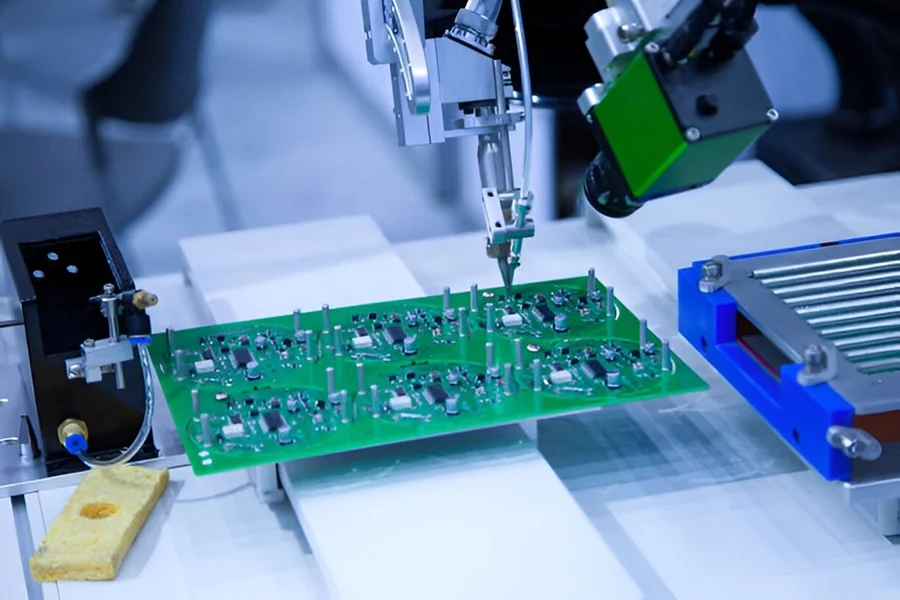
PCB fabrication and assembly is the complete manufacturing process that transforms an electronic design into a working printed circuit board populated with components. It combines two critical stages: fabricating the bare PCB according to design specifications and assembling electronic components onto that board to create a functional unit. PCB fabrication and assembly is essential for ensuring electrical performance, mechanical stability, and long-term reliability in electronic products across industries.
By integrating fabrication and assembly into a streamlined workflow, manufacturers can reduce errors, shorten production cycles, and improve overall product quality. PCB fabrication and assembly is not just a manufacturing task but a coordinated engineering process that directly impacts the success of the final electronic device.
The Importance of Integrated PCB Fabrication and Assembly
Managing PCB fabrication and assembly as a unified process offers significant advantages for product development and scalability.
Design Accuracy and Process Compatibility
When PCB fabrication and assembly are closely aligned, design files such as Gerber data, bills of materials, and assembly drawings are optimized for real-world manufacturing conditions. This alignment reduces mismatches between board layout and component placement, ensuring that the fabricated PCB supports efficient and accurate assembly.
Reduced Lead Time and Cost Efficiency
Integrated PCB fabrication and assembly minimizes handoffs between suppliers, which often cause delays and miscommunication. A single coordinated process improves scheduling, reduces rework, and helps control production costs, especially for complex or time-sensitive projects.
PCB Fabrication Stage Explained
The fabrication stage focuses on creating the bare printed circuit board based on the approved design files.
Material Selection and Layer Construction
PCB fabrication and assembly begins with selecting appropriate base materials such as FR-4, high-frequency laminates, or flexible substrates depending on the application. Multilayer construction involves stacking copper layers with insulating materials to achieve the required electrical performance and mechanical strength.
Imaging, Etching, and Drilling
During PCB fabrication and assembly, copper patterns are transferred onto the board using imaging and etching processes. Precision drilling creates vias and mounting holes, allowing electrical connections between layers and preparing the board for component installation during assembly.
PCB Assembly Process Overview
Once fabrication is complete, the bare boards move into the assembly phase where electronic components are mounted and soldered.
Component Placement and Soldering
PCB fabrication and assembly relies on accurate component placement to ensure reliable electrical connections. Components are positioned according to design data and soldered using controlled processes that create strong, consistent joints. Proper soldering is essential for preventing electrical failures and ensuring long-term performance.
Through-Hole and Surface Mount Integration
Modern PCB fabrication and assembly often involves a combination of component technologies. Integrating different mounting methods within a single assembly requires careful process planning to maintain consistency and avoid thermal or mechanical stress on the board.
Quality Control in PCB Fabrication and Assembly
Quality assurance is a critical part of PCB fabrication and assembly, as defects at any stage can compromise the entire product.
Inspection and Electrical Testing
Throughout PCB fabrication and assembly, inspections verify trace accuracy, solder joint quality, and component alignment. Electrical testing confirms continuity, insulation resistance, and functional performance, ensuring the assembled board meets design intent.
Reliability and Compliance Validation
Many industries require PCB fabrication and assembly to comply with strict reliability standards. Environmental testing, thermal cycling, and vibration analysis help confirm that the finished assemblies can operate reliably under real-world conditions.
Common Challenges in PCB Fabrication and Assembly
Despite advanced technology, PCB fabrication and assembly presents several challenges that require expertise and experience to overcome.
Design for Manufacturability Issues
Poorly optimized designs can lead to fabrication defects or assembly difficulties. Successful PCB fabrication and assembly depends on early design reviews that address trace spacing, component footprints, and solderability considerations.
Supply Chain and Component Availability
PCB fabrication and assembly schedules are often influenced by component sourcing. Managing material availability while maintaining quality standards is essential for meeting delivery timelines without compromising performance.
Applications of PCB Fabrication and Assembly
PCB fabrication and assembly supports a wide range of industries and product types.
Industrial and Automation Systems
In industrial environments, PCB fabrication and assembly must deliver durable boards capable of operating under electrical noise, temperature variations, and mechanical stress.
Medical, Automotive, and Consumer Electronics
From life-critical medical devices to automotive control systems and consumer electronics, PCB fabrication and assembly ensures consistent functionality, safety, and performance across diverse applications.
Future Trends in PCB Fabrication and Assembly
Advancements in electronics continue to shape the evolution of PCB fabrication and assembly.
Higher Density and Miniaturization
As devices become smaller and more powerful, PCB fabrication and assembly must support finer traces, higher component density, and more complex multilayer designs without sacrificing reliability.
Automation and Smart Manufacturing
Automation, data-driven quality control, and digital process optimization are transforming PCB fabrication and assembly into a more efficient and predictable manufacturing discipline.
Conclusion
PCB fabrication and assembly is the foundation of reliable electronic manufacturing, combining precision engineering with controlled production processes to deliver high-performance circuit boards. From material selection and board construction to component placement and testing, every step plays a vital role in product success. To achieve consistent quality, faster turnaround, and dependable results, partnering with an experienced printed circuit board assembler ensures that your designs are transformed into production-ready assemblies that meet both technical and commercial goals.
